How baby massage supports bonding and attachment, why asking your baby's permission matters, and how dads and partners can connect through touch.
Touch is the first language your baby understands. Long before words, babies learn about safety and love through being held, stroked and responded to. Infant massage turns that everyday touch into a calm, focused time together, and for many families it becomes the part of the day they look forward to most. This article explains how massage supports bonding, why the way you massage matters as much as the strokes, and how mothers, fathers and other caregivers can all benefit.
What “bonding” really means
Bonding is the growing emotional connection between a baby and the people who care for them. It does not happen in one magic moment after birth. It builds over months, through thousands of small interactions: a cry that is answered, a smile that is returned, a body that is held when it needs comfort. Psychologists call this responsive care, and it is the foundation of secure attachment.
Massage is valuable because it packs many of these interactions into a few unhurried minutes. You are looking at your baby, talking or singing, noticing their reactions and adjusting what you do. That two-way conversation is what bonding is made of.
How massage supports connection
It slows you both down
Days with a baby are busy and often stressful. Massage creates a pocket of calm where your only job is to be present. Many parents tell us it is the first time in the day they have truly looked at their baby.
It teaches you your baby’s signals
IAIM classes put a strong emphasis on reading cues: when your baby is ready to engage, and when they need a break. Over time you get better at recognising hunger, tiredness and over-stimulation, which helps in every part of caring for your baby.
It may ease stress for parents
Research into massage for healthy, full-term babies is still developing. A Cochrane review found too few high-quality studies to prove effects on development, and called for more research on parent-infant interaction specifically. A 2022 systematic review points to earlier studies suggesting that infant massage may ease mothers’ anxiety and stress, and that fathers felt less stressed after attending an infant massage course. Parents often describe feeling more confident and capable, which matters a great deal in the early months.
Respect first: asking your baby’s permission
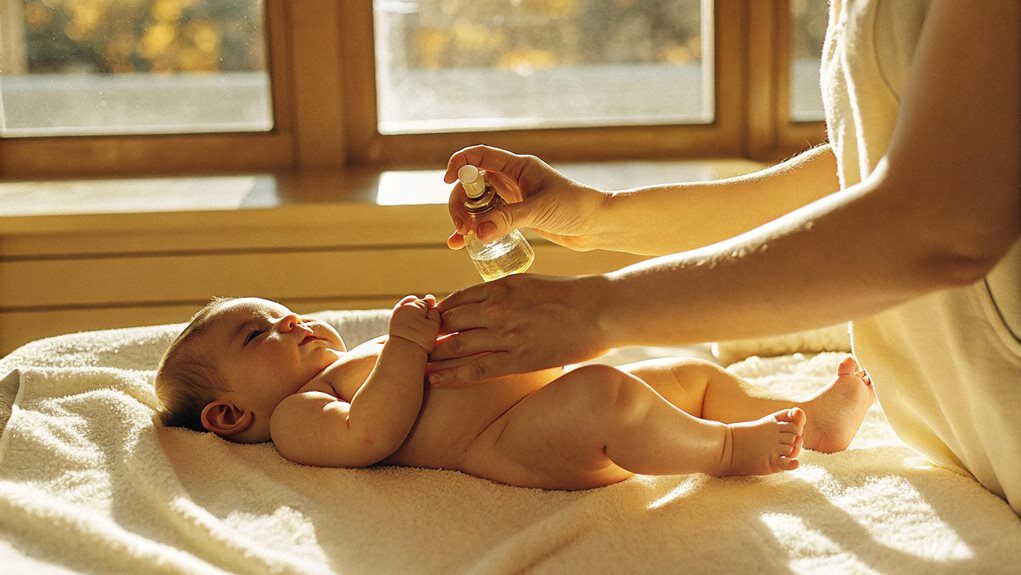
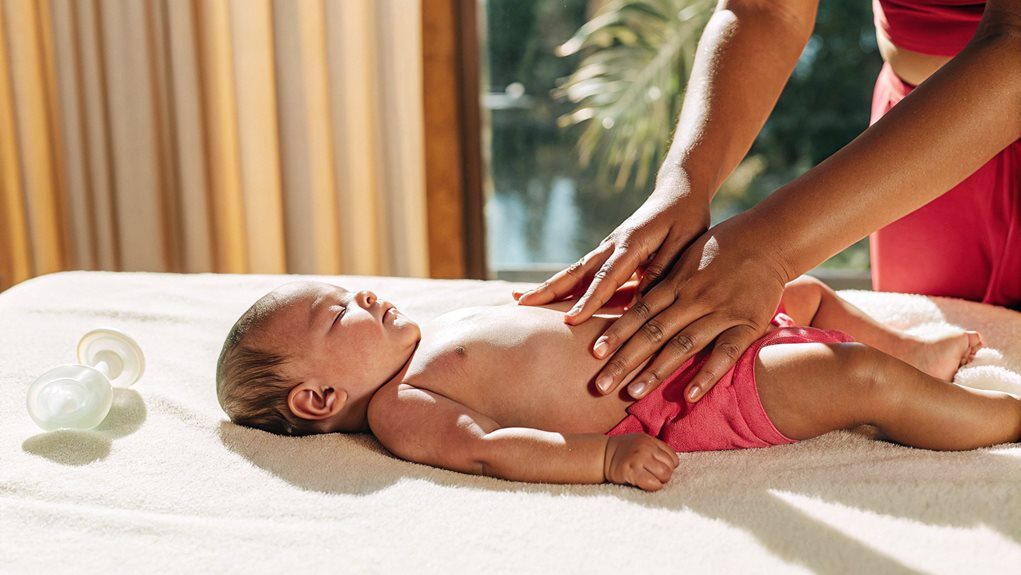
One thing that makes the IAIM approach different is that every massage begins by asking the baby’s permission. You warm a little oil in your hands, show your baby, and ask “May I massage you?” Then you wait and watch.
This might seem unusual with a tiny baby, but it sends a powerful message: your body belongs to you, and your feelings matter. It also stops massage from becoming a chore done to a baby who is not in the mood. If your baby says “no” with their body, you simply cuddle instead.
Bonding for dads, partners and other caregivers
Breastfeeding mothers often spend the most hands-on time with a new baby. Massage gives fathers, partners and grandparents a meaningful, practical way to connect too. Many fathers find a regular evening massage becomes “their” special time with the baby, and it gives the breastfeeding parent a well-earned break.
Massage can also support families in special circumstances: babies born early, adoptive and foster families, and parents who are struggling with low mood after the birth. In these situations, speak to your healthcare provider and let your instructor know so they can adapt the approach.
Simple ways to make massage a bonding ritual
- Pick a regular time, such as after the bath, so it becomes part of your rhythm. A calming evening routine can also help with your baby’s sleep.
- Make eye contact and talk. Describe what you are doing, sing a song or simply chat.
- Put the phone away. Ten distraction-free minutes are worth more than half an hour of half-attention.
- Follow your baby’s lead. Some days they will love a full massage, other days just their feet.
- Keep going as they grow. Toddlers and older children still love massage. It just looks different.
If you are new to massage, start with our gentle guide to massaging a newborn, then build up from there.
Learn together in an IAIM class
A baby massage class is not just about learning strokes. It is a chance to meet other parents, share the ups and downs of the early months and gain confidence with expert support. Group classes help reduce isolation, and private sessions are available if you prefer one-on-one time. Find a Certified Infant Massage Instructor in your area, or learn more about the benefits of infant massage.
Are you a nurse, midwife, doula or therapist who would love to share this with families? IAIM South Africa trains professionals to become Certified Infant Massage Instructors.
Sources