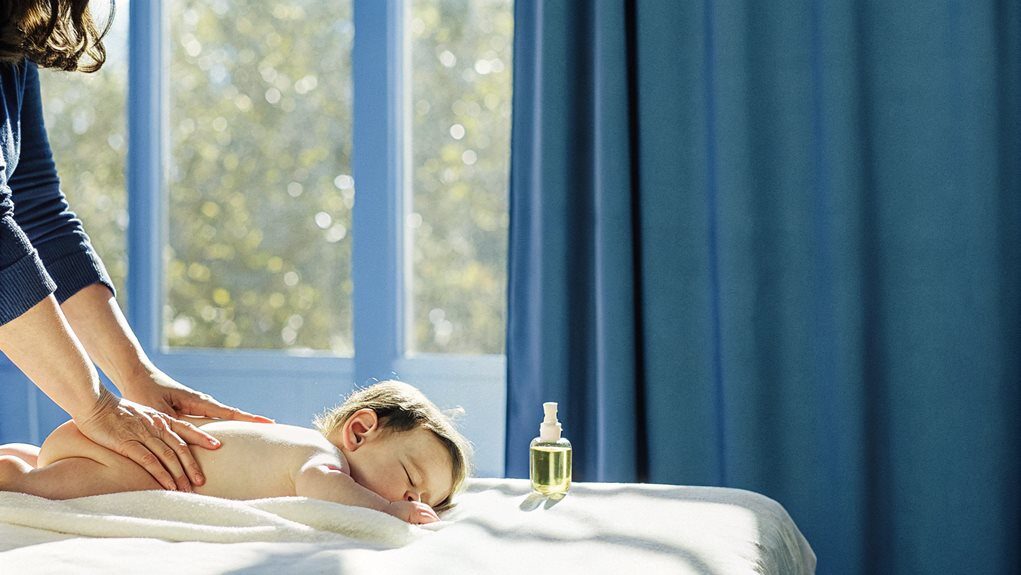
If your baby fights sleep every evening, you are not alone. A short, gentle massage as part of a predictable bedtime routine is one of the most loved tools in IAIM classes. It gives your baby a clear signal that the day is winding down, and it gives you ten quiet minutes of connection at the end of a long day. Here is what the research says about massage and sleep, how to build a bedtime massage routine, and how to tell when your baby has had enough.
Can massage really help a baby sleep?
Massage will not turn a newborn into a baby who sleeps through the night, and anyone who promises that is overselling. What it can do is help your baby move from an alert, busy state into a calm one, which makes falling asleep easier.
The research is encouraging but mixed. A Cochrane review of infant massage found some studies reporting better sleep and lower levels of the stress hormone cortisol, but judged the overall quality of evidence for healthy, full-term babies too low to draw firm conclusions. A 2019 narrative review by Tiffany Field describes how moderate-pressure massage is linked with increased vagal activity, the “rest and digest” side of the nervous system, which may explain the calming effect many parents notice.
In practice, the benefit comes from routine. Babies thrive on predictability. When the same sequence happens every evening, such as bath, massage, feed and bed, your baby learns what comes next.
A simple bedtime massage routine
1. Set the scene
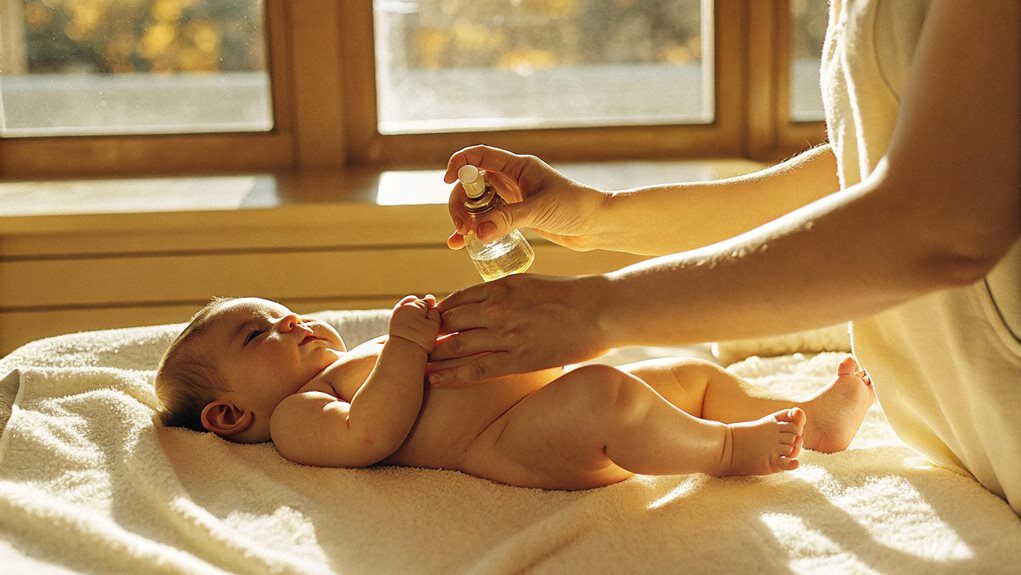
Choose a warm, draught-free room with soft lighting. Lay your baby on a towel on the bed or on a changing mat on the floor. Have a small amount of unscented, cold-pressed vegetable oil ready. Our guide to the best oils for baby massage explains what to choose and what to avoid.
2. Relax yourself first
Take a few slow breaths and drop your shoulders. Babies pick up on your mood, so a relaxed parent makes for a relaxed massage.
3. Ask permission
Rub the oil between your palms, let your baby see and hear it, and ask “Would you like a massage?” Watch the response. A calm, alert baby who looks at you is ready. A baby who turns away, arches or fusses is saying “not now”.
4. Start with the legs and feet
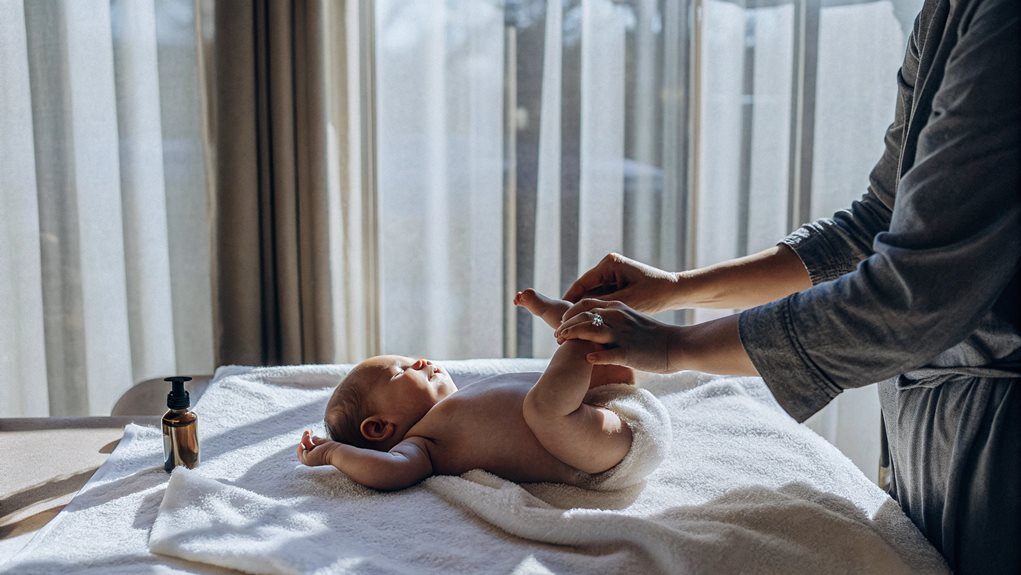
Legs are the least intrusive place to begin. Use long, slow strokes from the thigh to the ankle, then gentle thumb circles on the soles of the feet.
5. Move to the tummy and chest
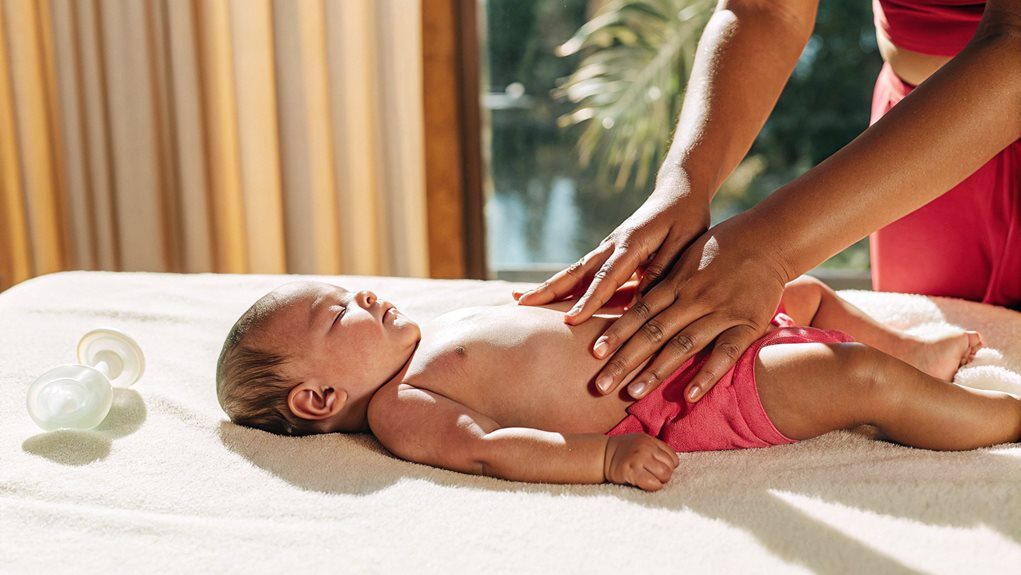
Use slow clockwise strokes on the tummy, then flat hands stroking out from the centre of the chest towards the shoulders, as if smoothing the pages of a book.
6. Finish with the back
If your baby enjoys tummy time, lie them across your lap and use long, slow strokes from the neck down to the bottom. Back strokes are often the most sleep-inducing part of the routine.
Keep the pressure gentle but firm (feather-light strokes can tickle and over-stimulate) and the pace slow. Ten minutes is plenty. Then move straight on to a feed, a cuddle and bed.
Reading your baby’s cues
One of the core ideas IAIM instructors teach is that massage is something you do with your baby, not to your baby. Learn to spot the signs:
- Engagement cues: eye contact, relaxed hands, cooing, smiling, a calm face.
- Disengagement cues: turning the head away, arching, splayed fingers, frowning, hiccups, yawning or crying.
If you see disengagement cues, pause, hold your baby still or stop altogether. You can always try again tomorrow. Responding to these signals is also one of the reasons massage is so good for building a strong bond with your baby.
How often should you do it?
For bedtime, once a day is ideal. Some parents use a shorter version, just legs and back, on busy evenings. Consistency matters more than length. If your baby is newborn, start with a minute or two and build up as they show they enjoy it. Our step-by-step guide to massaging a newborn covers the early weeks in more detail.
When sleep problems need more than massage
Speak to your clinic sister or doctor if your baby snores loudly, has pauses in breathing, seems in pain, is not feeding well or is unusually difficult to wake. Massage is a comfort tool, not a treatment for medical problems.
Learn a full bedtime routine with an instructor
A short course with a Certified Infant Massage Instructor teaches you a complete routine, the right pressure for your baby and how to adapt it as they grow. Classes are small and relaxed, and instructors demonstrate on a doll, so you stay in charge of your own baby. Find an instructor near you or read more about what happens in an IAIM baby massage class.
Sources
- Bennett C, Underdown A, Barlow J. Massage for promoting mental and physical health in typically developing infants under the age of six months. Cochrane Database of Systematic Reviews, 2013.
- Field T. Pediatric massage therapy research: a narrative review. Children, 2019.
This article is general information and not a substitute for medical advice.