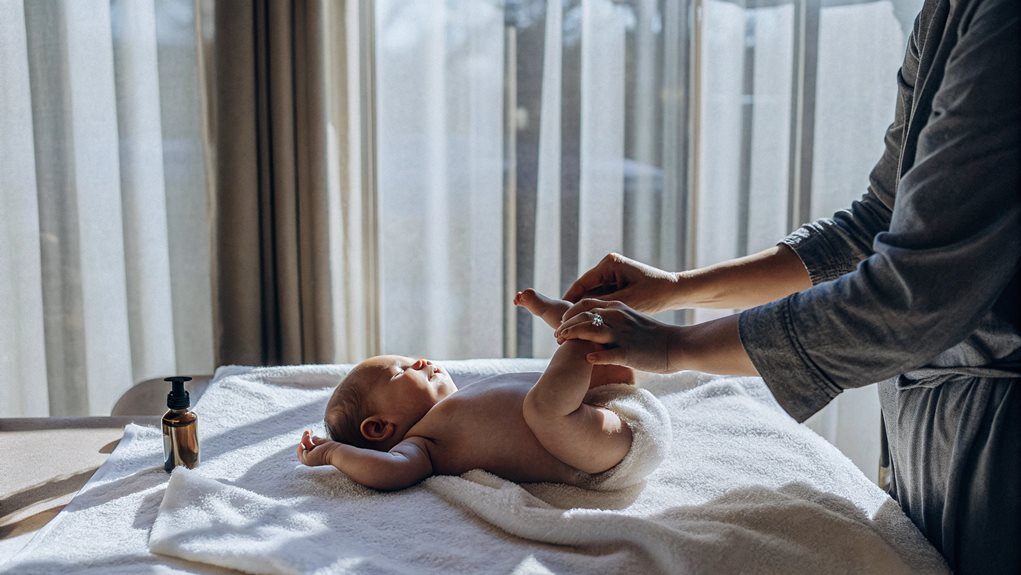
Massaging a newborn can feel daunting. They seem so small, and you may worry about pressing too hard or doing it “wrong”. The good news is that gentle, loving touch is something every parent can learn, and you do not need special skills to begin. This guide covers when to start, how to prepare, a simple step-by-step routine for the early weeks, and how often to massage your baby as they grow.
When can you start massaging a newborn?
There is no fixed minimum age for gentle touch. Holding, stroking and skin-to-skin contact are good for babies from birth. A full, structured massage is a little different. The NCT says massage can start whenever you like, as long as your baby seems to enjoy it. In practice, some newborns find a full routine too stimulating in the very first weeks, so many parents start gently and build up, or wait until after the six-week check.
A sensible approach is:
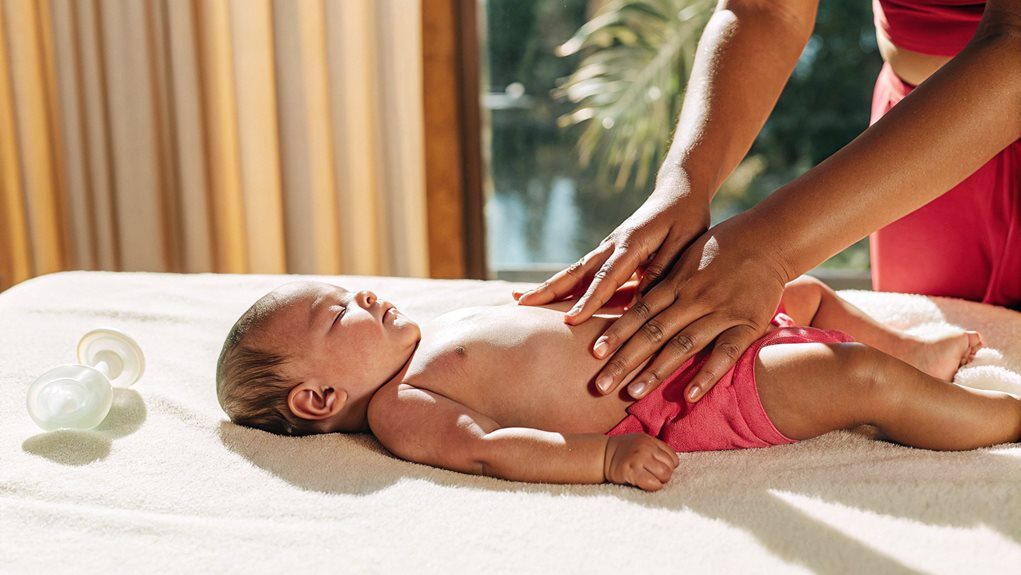
- Birth to about six weeks: resting hands, gentle stroking of the legs, feet and back, and lots of skin-to-skin contact. Avoid the tummy area until the umbilical cord stump has fallen off and healed.
- From about six weeks: introduce a fuller routine, adding strokes as your baby shows they enjoy them.
If your baby was born prematurely, has a medical condition or is in a neonatal unit, ask your doctor or nursing team before you start. Our article on when not to massage your baby lists the main situations to hold off.
Getting ready
- Pick a calm moment. Your baby should be awake, alert and content, not hungry, tired or just fed. Wait 30 to 45 minutes after a feed.
- Keep it warm. Babies lose heat quickly. Choose a warm, draught-free room and keep a towel or blanket handy to cover the parts you are not massaging.
- Get comfortable. Sit on the floor or bed with your baby on a soft towel in front of you, or on your lap with your legs outstretched.
- Remove rings and watches, and make sure your nails are short.
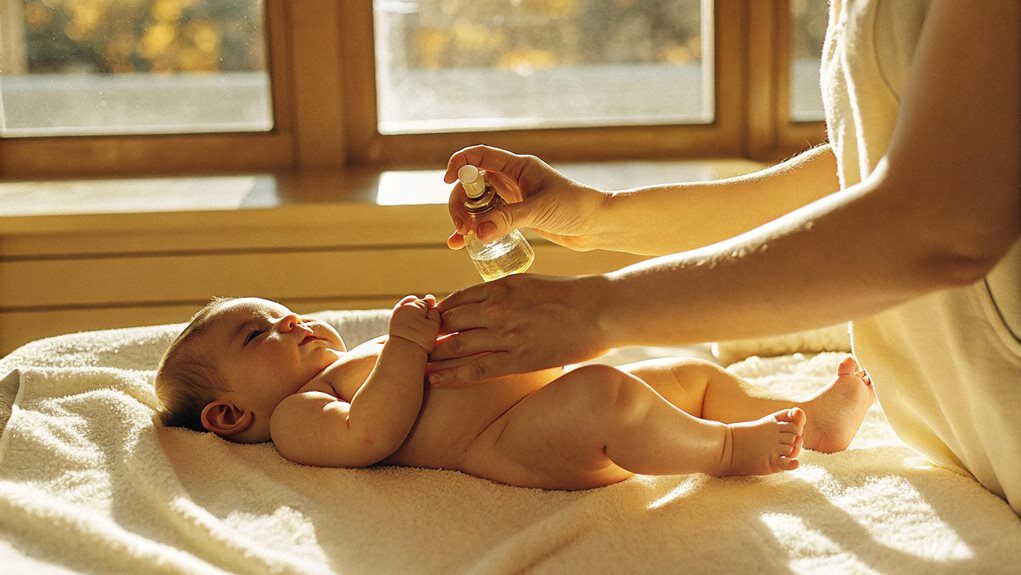
- Choose a suitable oil, or none. For newborns, many parents use no oil at all. If you do, use a tiny amount of unscented, cold-pressed vegetable oil. See our guide to the best oils for baby massage.
A gentle step-by-step routine for newborns
Step 1: Ask permission
Rub your hands together, show your baby your palms and ask, “May I massage you?” Look for a calm, engaged response. If your baby turns away or fusses, try again another time.
Step 2: Resting hands
Place your warm hands lightly on your baby’s legs or back and keep them still for a few seconds. This is often all a very young baby needs at first.
Step 3: Legs
Hold one ankle gently and stroke from the thigh down to the foot with your other hand, one hand after the other. Repeat a few times, then swap legs.
Step 4: Feet
Use your thumbs to make small circles on the sole of each foot, then gently stroke each toe. Feet are a favourite with most babies.
Step 5: Arms and hands
Stroke from shoulder to wrist, then gently open the hand and stroke the palm. Do not force a closed fist open; newborns often keep their hands curled, and that is normal.
Step 6: Back
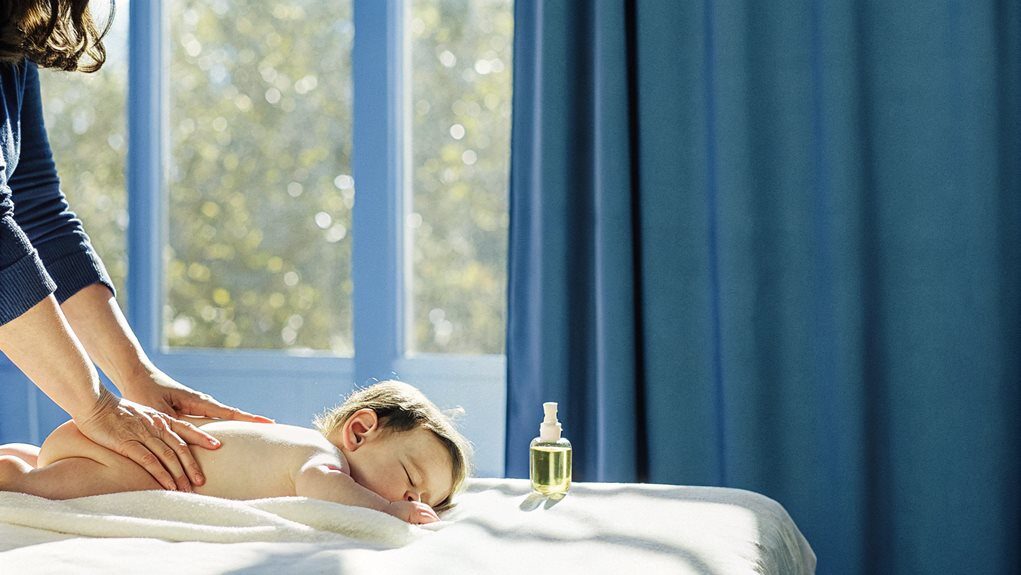
If your baby is comfortable on their tummy across your lap, use slow, flat-handed strokes from the shoulders to the bottom. Keep your baby’s face clear and stay close.
Step 7: Finish with a cuddle
Wrap your baby up and hold them close. A massage ending in a calm cuddle teaches your baby that touch is safe and pleasant.
Use gentle but firm, slow strokes. Very light, feathery touch can tickle and over-stimulate. For a newborn, two to five minutes is plenty; you can build up to ten or fifteen minutes as your baby grows.
How often should you massage your baby?
There is no rule, and every baby is different. As a guide:
- Newborns: short sessions of a few minutes, a few times a week, or daily if your baby enjoys them.
- From about two to six months: once a day works well for many families, often as part of the evening routine.
- Older babies and toddlers: shorter, playful massages, a few times a week, adapted to a busy, wriggly child.
The most important thing is to follow your baby’s cues. If they love it, massage more often. If they are unsettled, keep it short or skip a day. A regular evening massage can also support better sleep and, over time, a stronger bond between you.
Common newborn massage questions
What if my baby cries during the massage?
Stop, pick your baby up and comfort them. Crying is communication. Try again another day, perhaps with just the legs and feet.
Can I massage my baby’s tummy if they have wind?
Once the cord stump has healed, yes. Gentle clockwise tummy strokes can help. Our guide to baby massage for colic and gas explains the strokes IAIM instructors teach.
Is it safe to massage the head and face?
Gentle strokes on the forehead and cheeks are fine for most babies, but avoid pressing on the soft spot (fontanelle) and keep oil away from the eyes.
Learn newborn massage with a qualified instructor
Reading a guide is a good start, but nothing beats having a trained instructor watch you, answer your questions and help you read your baby’s responses. IAIM classes for parents run over about five sessions, in small groups or privately. Instructors demonstrate on a doll, so only you touch your baby. Find a Certified Infant Massage Instructor near you, or see our infant massage FAQs for parents.
This article is general information and not a substitute for medical advice.